By Tom Dowell | March 2026 | PilotLedger
For years, the commercial drone industry has operated with an unspoken understanding: DJI makes the tools, and American pilots figure out how to use them. That arrangement worked well enough, until it didn't.
On December 23, 2025, the Federal Communications Commission added DJI and other foreign-manufactured unmanned aircraft systems to its "Covered List," triggering a regulatory mechanism baked into the 2025 National Defense Authorization Act. The result is straightforward: no new DJI products can be legally imported, marketed, or sold in the United States. The drones you already own still fly. The next generation? You won't be getting it.
This wasn't a surprise decision handed down from on high. It was the end of a years-long regulatory trajectory, one that many of us in the commercial UAS community watched unfold in slow motion.
How We Got Here
The concerns about DJI didn't materialize overnight. As early as 2017, the U.S. Army banned DJI drones over cybersecurity vulnerabilities. That same year, the Department of Homeland Security issued internal warnings that Chinese-manufactured drones might be transmitting sensitive flight data back to their manufacturers. In 2020, DJI landed on the Commerce Department's Entity List over alleged ties to human rights abuses in Xinjiang. The Department of Defense added DJI to its list of companies allegedly working with China's People's Liberation Army in 2022. DJI challenged that designation in court, and lost in October 2025.
The NDAA created a simple mechanism: a U.S. national security agency had until December 23, 2025, to complete a formal security audit of DJI. If no agency completed that review, DJI would be automatically placed on the FCC Covered List. No agency stepped up. The deadline passed. The ban went into effect.
The FCC didn't stop at DJI specifically; it applied the restriction broadly to all new drone models produced by foreign manufacturers. The regulatory environment that commercial pilots have navigated for the past several years has fundamentally changed.
The Hard Truth About Market Share
Here's the number that should give every American drone manufacturer pause: according to a comprehensive survey of over 8,000 commercial drone operators, 96.7% currently use DJI equipment, with 70% operating fleets that are entirely DJI-based. Read that again. DJI held a near-monopoly on the commercial UAS market not because of government backing or protectionist policies, but because they built a better product at a better price, faster than anyone else could match. Their manufacturing infrastructure, vertical integration, supply chain, and software ecosystem were, and in most respects still are, unmatched. That is the benchmark American manufacturers now have to meet.
What's Actually Available Today
The good news is that a domestic industry does exist. It's smaller, more specialized, and generally more expensive, but it exists. A few names worth knowing:
Skydio is the most visible American drone manufacturer right now, shipping autonomous platforms powered by AI-driven obstacle avoidance built around NVIDIA Jetson Orin compute. The X10 is their flagship enterprise product, used by public safety agencies, utilities, and defense contractors. It's genuinely capable hardware. It's also priced for government procurement budgets, not small commercial operators. It should also be noted that, most people are convinced that Skydio was one of the main driving forces pushing Congress to enact a ban, and because of that, A large number of drone pilots just will not use Skydio products.
Freefly Systems, based in Washington state, makes the Astro, a modular, heavy-lift platform well suited for LiDAR, cinema-grade cameras, and precision mapping payloads. If you're running a larger survey or inspection operation with high payload requirements, Freefly deserves serious consideration.
Inspired Flight produces the IF800 and IF1200A series, American-made multirotor platforms that support LiDAR and photogrammetry payloads and are NDAA-compliant. Solid platforms for commercial mapping work.
Teledyne FLIR brings serious sensor heritage to the table. Their SIRAS platform, now discontinued, is built for inspection and ISR with integrated thermal capabilities. Its major failing being, after its initial release very little was done to improve its failings. This seems to be a common the American drone industry.
Teal Drones (a Red Cat Holdings company) occupies an interesting space, having secured DoD contracts for their small reconnaissance platforms. Their Blue UAS clearance makes them relevant for government-adjacent work, though their technology has very little, to no use, in the commercial market.
These are real companies making real products. But let's be honest about where they fall short.
What the Industry Is Still Missing
As someone who has spent years doing commercial photogrammetry, LiDAR mapping, thermal inspection, and solar field surveys, most of that work powered by DJI hardware, I can tell you clearly what the market needs that it doesn't yet have.
1. Price Parity for Working Operators
The commercial drone industry is not made up of government agencies with six-figure procurement budgets. It's made up of sole proprietors, small LLCs, and regional service companies doing real estate photography, construction monitoring, agricultural surveys, pipeline inspections, and infrastructure assessments. Most of us made business decisions based on a DJI Matrice or Mavic price point. We can't absorb a 3x to 5x cost increase without restructuring our business models entirely.
American manufacturers need to close this gap, not by compromising on quality, but by building the manufacturing scale and supply chain efficiency that makes competitive pricing possible. That requires capital investment, not just patriotic rhetoric.
2. A Reliable Parts and Repair Ecosystem
DJI's support infrastructure, parts availability, repair centers, replacement components, firmware updates, has been built over fifteen years. When a prop strikes something on a Matrice in the field, replacement parts ship fast. The same cannot be said for most domestic alternatives today. For commercial operators running tight project schedules, downtime is money. Until American manufacturers can guarantee rapid parts availability and field-serviceable platforms, large fleet transitions will move slowly.
3. Software That Actually Works
DJI's ecosystem, Pilot 2, Terra, FlightHub 2, DJI Care, is deeply integrated and genuinely functional. The software alone has kept many operators on DJI platforms even as regulatory concerns mounted. American hardware that ships with half-finished mission planning software or requires cobbling together third-party tools isn't a real replacement.
A drone platform in 2026 is a data collection system. The hardware is only as valuable as the software that drives the mission and processes the output. Domestic manufacturers need to treat software as a first-class product, not an afterthought.
4. Prosumer and Small Commercial Options
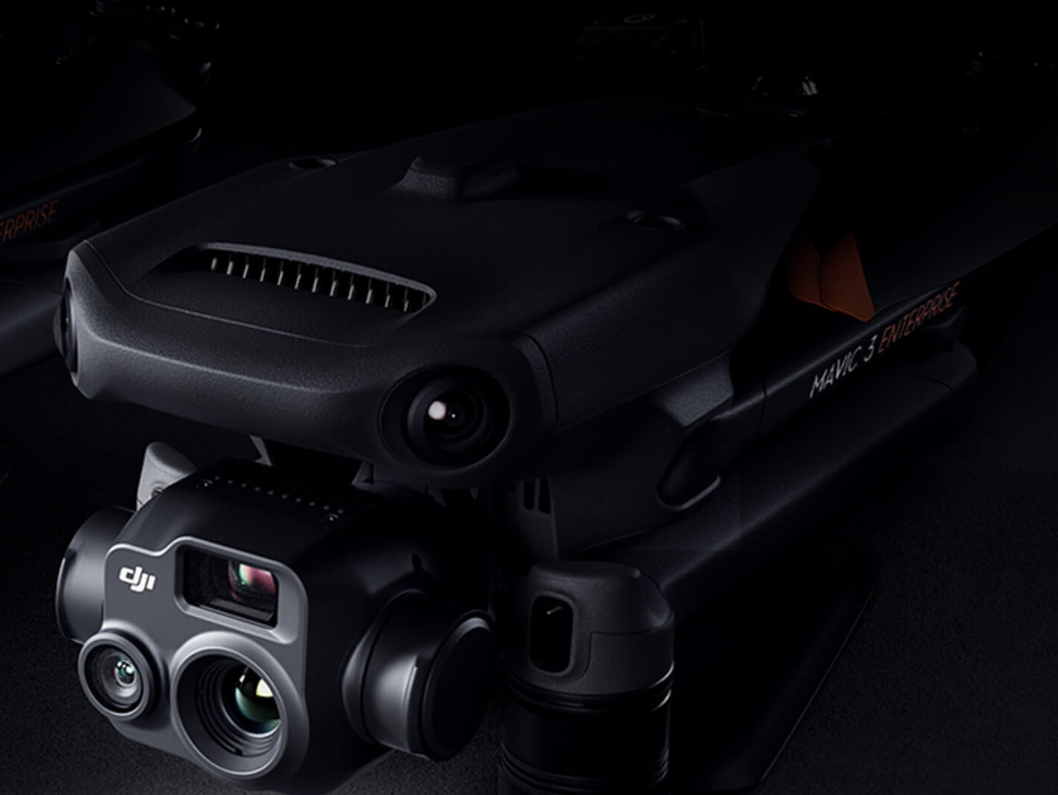
The heavy-lift, enterprise-grade market is better served today than it was two years ago. But there is an enormous gap at the prosumer and small commercial level, the space that DJI's Mavic 3 and Matrice 4 Enterprise series drones occupied. A capable, sub-$5,000 American-made drone with RTK support, a mechanical shutter camera, truly integrated mapping software, and solid obstacle avoidance, simply does not exist in any meaningful volume today. This is where DJI owned the market, and it's where American manufacturers have the most ground to make up.
5. A Long-Term Support Commitment
When commercial operators invest in a drone platform, they're making a multi-year bet on that manufacturer's continued support. Batteries, firmware, accessories, regulatory compliance tools, all of it depends on the manufacturer staying in business and staying committed to the platform. The drone industry has a history of companies that appeared, raised capital, launched products, and then quietly faded. Operators need manufacturers who can credibly commit to long-term platform support.
Where This Leaves Working Pilots
If you are a commercial Part 107 operator flying DJI today, the immediate answer is: keep flying. The FAA has not banned DJI operations. Your existing aircraft remain legal to fly. Existing approved models can still be purchased from remaining inventory. Nothing changes operationally tomorrow.
But the horizon matters. Firmware updates may eventually become an issue. Long-term parts availability will become an issue. And as government and enterprise clients increasingly require NDAA-compliant equipment for contracted work, operators without compliant platforms will find themselves locked out of certain revenue streams.
The practical path forward is to begin evaluating alternatives now, while you still have operational DJI aircraft as a baseline for comparison. Run parallel workflows. Test platforms in your specific use case before committing to a transition. And watch the policy landscape, the FCC has reserved the ability to apply restrictions retroactively to previously authorized models in certain future enforcement scenarios.
A Word to American Manufacturers
This moment is an extraordinary opportunity, and it can be squandered. The drone industry doesn't need jingoism. It doesn't need products that exist only to check a compliance box on a government procurement form. It needs hardware and software that working pilots actually want to fly, at prices that make commercial sense for real businesses. The government has given domestic manufacturers something DJI never had: a protected lane. The question is whether American companies will use that lane to build something genuinely world-class, or whether they'll settle for being the only option in a diminished market. Build the platform that a commercial operator actually wants. Price it competitively. Support it with parts and software over the long term. Do that, and this industry will grow into one of the great American manufacturing success stories of the coming decade. Fail to do that, and we'll spend the next five years watching operators find creative ways to keep flying the DJI hardware they already have.
Keeping Your Business Ready for What's Next
Commercial drone operations don't pause while the industry figures out its supply chain. Your clients still need deliverables. Your equipment needs to be insured, tracked, and maintained. Your invoices need to go out, and your business needs to stay organized through the transition — regardless of what hardware you end up flying. That's exactly what PilotLedger is built for. Whether you're managing a single-aircraft solo operation or a growing multi-pilot commercial UAS business, PilotLedger gives you the CRM, invoicing, client management, and business tools that let you focus on flying, not on spreadsheets. The hardware will catch up. Make sure your business operations are already where they need to be.
Tom Dowell is a licensed aircraft and UAS pilot, FAA Part 107 remote pilot certificate holder, and author of Fundamentals of Drone Photogrammetry, Mapping, and Survey. He is the founder of PilotLedger and owner of Drones Inbound LLC, providing commercial UAS services across six states.
© 2026 PilotLedger | pilotledger.com