The Commercial Drone Business Has a Management Problem
The FAA estimates there are over 400,000 active Part 107 certified commercial drone pilots in the United States. Most of them are skilled in the air. Very few have a system on the ground.
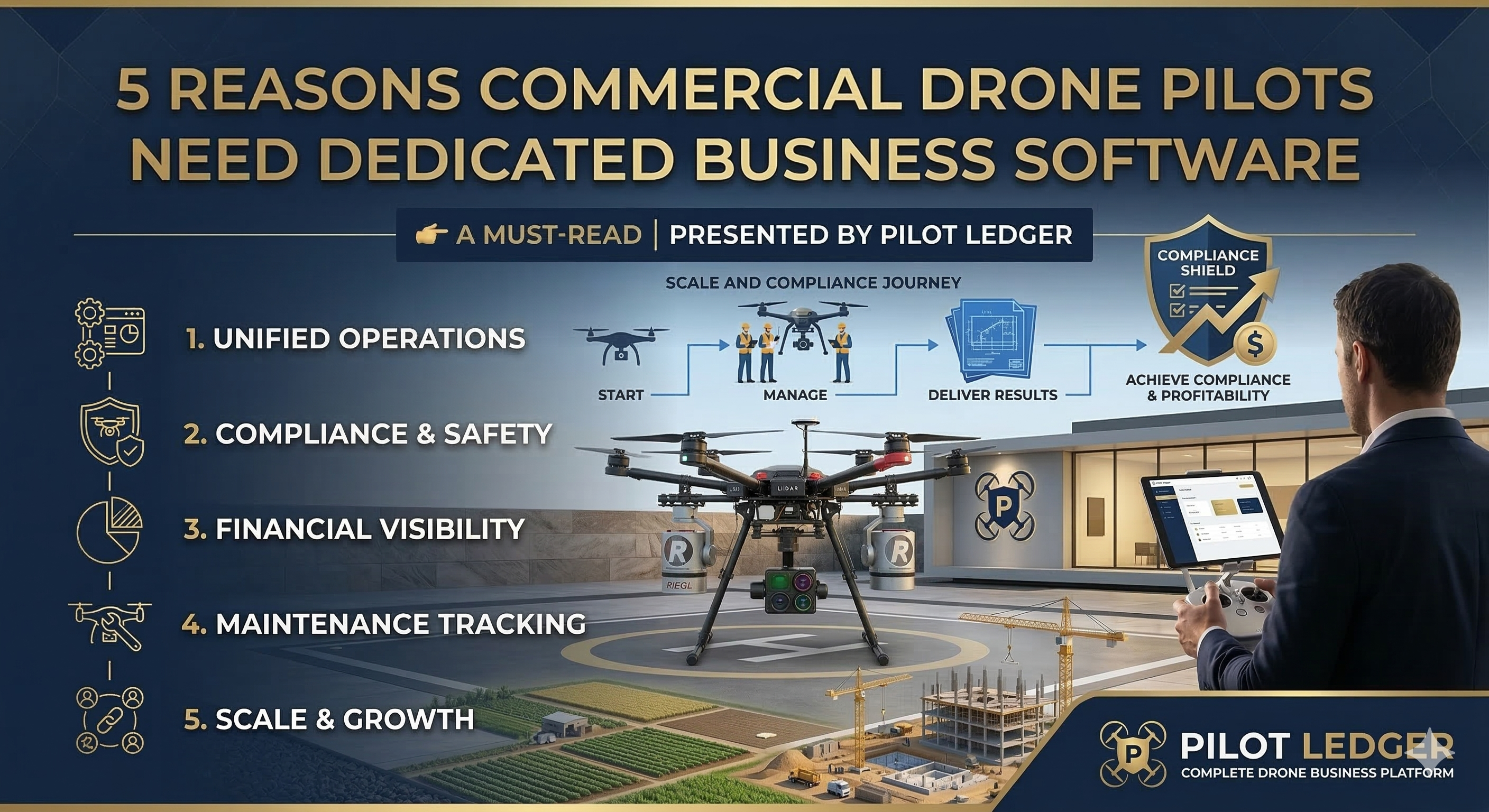
If you are quoting jobs in email, invoicing in Excel, and tracking clients in a notebook — you are not running a business. You are running a hobby that occasionally pays. Here are five reasons that needs to change.
1. Unprofessional Invoices Cost You Real Money
Your clients are comparing you to every other vendor they work with — architects, engineers, contractors. When your invoice is a Word document with your logo pasted in, it signals that you are small-time. Professional invoicing software like PilotLedger sends clean, branded invoices in seconds and lets clients pay online. First impressions matter even after the job is done.
2. You Are Leaving Money on the Table With Overdue Invoices
Industry data from the SCORE Small Business Association shows that small business owners lose an average of 14% of receivables annually due to inconsistent follow-up. For a pilot doing $80,000 a year in work, that is over $11,000 gone. Automated invoice reminders are not optional — they are essential.
3. You Cannot Scale Without a Client Database
Every job you fly is a relationship. When a past client calls back six months later, do you remember their site address, the scope of the last job, and what you quoted them? A proper CRM built for drone operations keeps every client detail, communication note, and job history in one place so you can serve repeat clients like a professional outfit, not a one-man band.
4. Part 107 Operations Have Unique Business Requirements
Generic small business software was not built for drone work. You need quote templates that account for flight time, equipment, deliverable format, and weather risk windows. You need preflight checklists and battery cycle tracking built into your workflow — not bolted on. The FAA commercial UAS guidelines put the burden of operational documentation on the pilot. Your business software should make that easier, not harder.
5. Your Online Presence Determines Whether Clients Find You at All
Most commercial drone work is found, not sought. Clients search for pilots the same way they search for any contractor — online. Being listed in a purpose-built directory like FindADronePilot.com puts your business in front of clients who are actively looking to hire. Generic freelancer platforms bury drone pilots under unrelated results. A drone-specific directory means every visitor is a qualified lead.
The Bottom Line
The drone industry is professionalizing fast. The pilots who build real business infrastructure now — professional invoicing, a client CRM, automated follow-up, and a visible online presence — will capture market share that pilots running on spreadsheets will leave behind.
PilotLedger was built by a commercial drone pilot with a Lloyd's of London inspection contract and over a decade of field experience. It is purpose-built for the way Part 107 pilots actually work.
Try PilotLedger free — no credit card required.